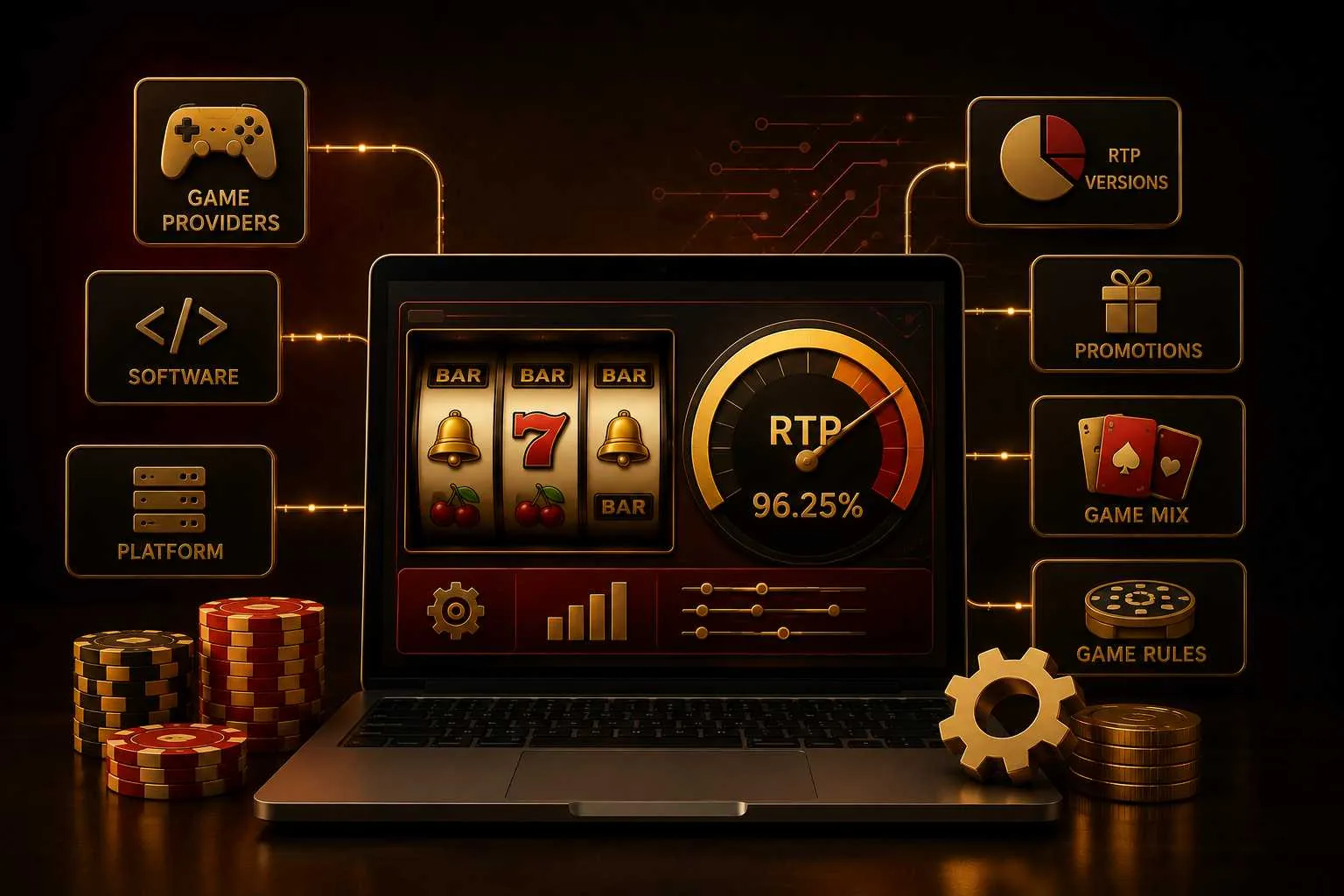
Players tend to credit or blame the casino for how much comes back to them. But the figure that really decides it — the payout rate — is set long before a site ever launches, in the software and the studios that build the games. When it ranked the best payout online casinos in Canada, the Star pointed at exactly this: two casinos can look the same and still hand money back at different rates, because of what's running underneath.
The provider behind the games does the heavy lifting
Few casinos build their own games. They license them — NetEnt, Pragmatic Play, Microgaming, Play'n GO and the rest — then wrap them in a platform that handles logins, payments and everything else. That split matters more than it sounds. The math of each game, meaning how often it pays, how big those wins run, and what it returns over the long haul, is the studio's work, not the operator's. A casino picks which games to stock; it doesn't get to rewrite the odds inside them.
So a lobby's payout profile is really a function of who's in it. Fill the shelves with high-RTP studios and players keep more over time. Lean on weaker titles and they keep less — even when both sites market themselves in the same glossy way.
What RTP actually measures
RTP — return to player — is a percentage, and it's theoretical. A 96% game is built to pay back $96 of every $100 wagered, averaged over millions of spins. Any single session can land nowhere near that. The number lives inside the game's random number generator and pay table, which is why independent RNG and fairness checks matter so much: they're the only real confirmation the figure is honest.
Here's the catch most players miss. Plenty of slots ship in more than one version — a 96.5% build and a 94% build of the same title. The operator chooses which to load. Nothing changes on screen, but the casino's effective payout rate moves. That alone is why a headline ranking is a starting point, not a verdict.
Why two casinos can run the same game differently
Version choice is just the obvious lever. The platform layer nudges returns in quieter ways too, and a few decisions sitting entirely on the operator's side can shift the blended payout rate without a player ever noticing:
- Which RTP build of a game gets deployed when more than one is available
- How promotions weight different titles toward wagering requirements
- What sits in the default lobby versus buried a few clicks deep
- How table games are configured — rules tweaks that quietly move the house edge
Add it all up and a casino's blended payout rate is the product of thousands of small calls. A big one is simply the types of games it leans on — a slots-heavy site behaves very differently from one built around blackjack and video poker, where player decisions and house edges sit in another range entirely. For anyone comparing options, the takeaway is blunt: the brand on the homepage tells you less than the studios it works with.
The Canadian layer: licensing, CAD and Interac
Canada adds its own filter. Ontario runs a regulated market through iGaming Ontario, where licensed operators have to use software that clears the province's technical standards, independent game testing included. Outside Ontario, plenty of players use offshore-licensed sites, and there the quality of oversight tracks the licensing jurisdiction and the studios behind the games.
Smaller things follow from the software too. Sites built for the Canadian market price and settle in Canadian dollars, which quietly saves the conversion drag that eats into returns when a balance sits in USD or EUR. Payments are a platform feature as well — clean Interac and Interac e-Transfer support is something the stack either bakes in or fumbles, and it decides how fast winnings actually land. And since most Canadian play now happens on a phone, the quality of the mobile casino software shapes the day-to-day experience as much as the desktop site does. None of this touches a game's RTP. All of it changes whether you comfortably get what the RTP implies.
Reading payout claims critically
Because the numbers that count live in the software, a payout ranking is only as good as the sources behind it. Independent testing agencies such as eCOGRA audit games and publish return figures, and the operators worth trusting make those reports easy to find rather than waving around a marketing stat. A payout claim you can't trace back to an audited game or a licensed jurisdiction is, at best, an educated guess.
For Canadian players, the sharper question isn't "which casino pays the most." It's "whose software is this, and who checked it." The operator builds the storefront; the providers set the odds. Rankings like the Star's are a fair place to start — but the payout rate they describe belongs to the engine underneath: the studios, the versions in play, and the testing behind them. Not the logo on the page.