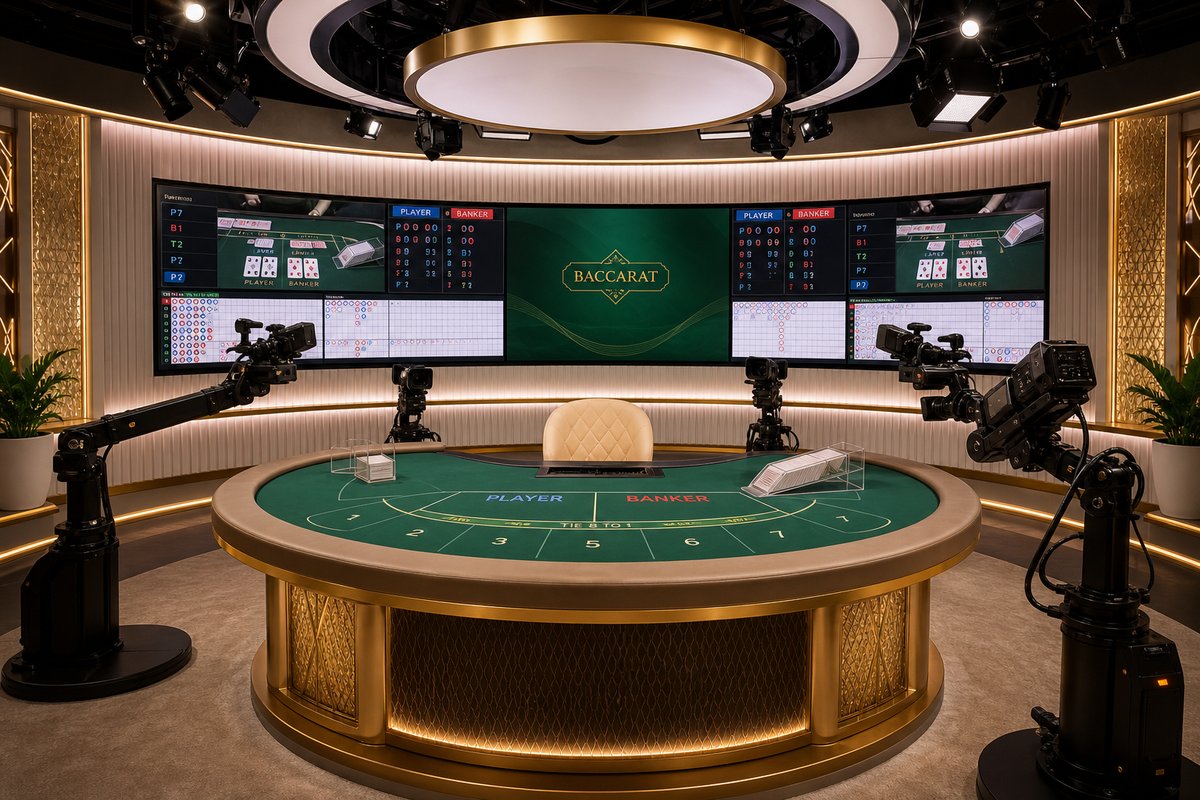
What is live casino software?
Live casino software refers to the technology that enables real-time streaming of casino table games from dedicated studios to online players. It includes the camera systems, optical character recognition (OCR) for reading cards and results, audio-visual encoding, and the game server software that connects player bets to the physical table.
Who is the largest live casino provider?
Evolution is the dominant global provider of live casino software, operating dedicated studios across Europe, North America, Asia, and beyond. Evolution's market share in live casino exceeds 70% globally. Playtech is the second-largest live casino supplier.
What is OCR technology in live casino?
OCR (Optical Character Recognition) is a technology used in live casino games to automatically read playing card values and roulette results from cameras in real time. Sensors on the card shoe detect each card as it is drawn, and the result is instantly transmitted to players and recorded in the game server, enabling real-time bet settlement.
What is a live casino game show?
Live casino game shows are a format that combines a real studio presenter with game show mechanics — large spinning wheels, bonus multipliers, and audience interaction — pioneered by Evolution. Titles like Crazy Time, Monopoly Live, Dream Catcher, and Mega Ball have broad mainstream appeal beyond traditional casino game audiences.
How many live tables does a typical live casino studio operate?
Major live casino providers like Evolution operate thousands of simultaneous table instances. A single physical studio table can serve many operators via the same feed, with separate interfaces tailored per brand. The number of physical tables ranges from 50 at smaller studios to several hundred at major hub studios in Riga and Malta.
What is the difference between generic and dedicated live casino tables?
Generic tables are shared environments open to players from multiple casino operators simultaneously. Dedicated tables are exclusive to a single operator, branded with that casino's design, and served by specially trained presenters. Dedicated tables require higher licensing costs but offer a more branded experience.
Can players interact with live casino dealers?
Yes. Most live casino platforms include a chat function allowing players to communicate with dealers in real time. Dealers acknowledge and respond to player messages. This interaction is a key differentiator from RNG games and contributes to the social appeal of live casino.
What internet connection is needed for live casino?
Live casino streaming requires a stable connection of at least 5–10 Mbps for standard definition and 15+ Mbps for HD quality. Mobile data connections (4G/5G) are generally sufficient, though Wi-Fi is preferred for extended sessions to avoid buffering.